With modern technology, living life ‘in the moment’ has never been easier. But this new nowness is far from what earlier advocates had in mind, and might only be distracting us from the planet’s ever more pressing challenges. Continue reading “The new ‘power of now’ and the perils of the hyper-present”
Category: politics
Cyber-revisionism: Parties’ Attitudes to Web Archiving Are a Worrying Sign for Digital Democracy

 Following an earlier, somewhat rantier post on this blog when the news originally broke, I’ve written a more academically-oriented piece on British political parties’ cyber-revisionism with Mor Rubenstein, a current MSc student here at the OII. This was published yesterday on the LSE Politics and Policy blog, and you can read it here. Mor’s undergraduate work on political parties on Facebook provided a useful counterpoint to party websites, and unearthed some deep ironies regarding the (dis)integration between the two platforms and some of the unintended consequences.
(The eagle-eyed may notice that the ‘Fahrenheit 401’ hook in the original post became ‘Fahrenheit 404’ – a less phonaesthetically evocative contrast with Bradbury’s 451 but more accurate, technically speaking…)
Fahrenheit 401: Digital Deletion Is Incompatible with Democracy


Quite understandably, book burning has a bad reputation. It is a scout badge for history’s nastiest antagonists – Nazis, Stalinists and the Taleban have indulged in it – and biblioclasm also provides the central motif for Ray Bradbury’s dystopian masterpiece Fahrenheit 451 (the temperature at which book paper burns), in which perversely named ‘firemen’ are tasked with obliterating burning outlawed books and occasionally the bookish. Continue reading “Fahrenheit 401: Digital Deletion Is Incompatible with Democracy”
For misogyny on Twitter, silence is easy – and not very helpful
The continued existence of misogyny in the twenty first century is morally repugnant, and the debate over abuse on Twitter reminds us that misogyny can take many guises and subsist in many different contexts. Yet today’s ‘#TwitterSilence’ – a day-long boycott of Twitter led by prominent female newspaper columnists – is undercut by a misunderstanding of the technological and social environment within which this abuse takes place. Continue reading “For misogyny on Twitter, silence is easy – and not very helpful”
Top of the Tree


Published in the Oxonian Globalist.
Can Twitter truly transform how the political agenda is set? Continue reading “Top of the Tree”
How Buzzfeed Could Save Politics
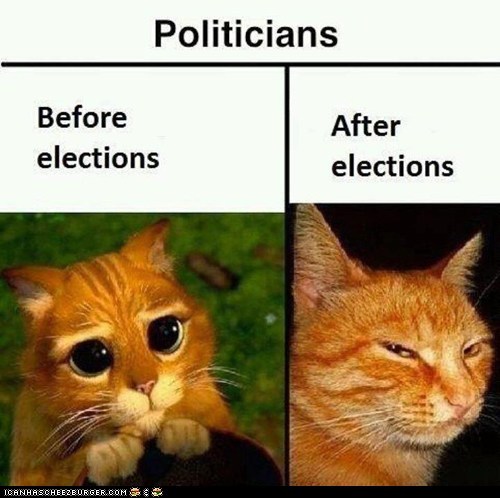

The political journalist Ben Smith surprised many when he joined Buzzfeed as its editor-in-chief in 2011. Buzzfeed has become almost synonymous with the sort of entertaining online ephemera that has spawned such neologisms as ‘lolcats’ and ‘listicles’, costing offices around the world countless hours in lost productivity. Continue reading “How Buzzfeed Could Save Politics”
What to Expect on Election Night

 |
| (C) Stijn Vogels |
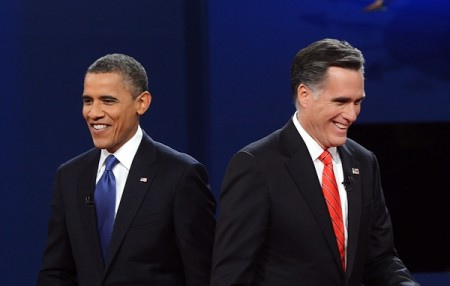
After eighteen months of campaigning, Americans vote in earnest in Tuesday’s presidential election, with opinion polls suggesting a tight race between incumbent President Barack Obama and former Massachusetts Governor Mitt Romney. For those planning on staying up to watch it, the crucial questions are: at what point will the identity of the next president be discernible, and when will we know for sure?
Let’s Peel the ‘Plastic’ Label off Team GB’s Foreign-born Athletes
Published on The Huffington Post.
The media has been expending plenty of column inches and airtime lamenting various aspects of the upcoming Olympic Games. Make no mistake: the failure of G4S to provide the requisite security staff is a true debacle, and lampooning a pitiful British summer has always been fair game. But one of the less helpful stories to have emerged in recent weeks is the discussion of so-called ‘Plastic Brits’: members of the British Olympic team who were born overseas.
Continue reading “Let’s Peel the ‘Plastic’ Label off Team GB’s Foreign-born Athletes”
Creative Licence – the case for a bold BBC under George Entwistle
 |
| (C) R/DV/RS |
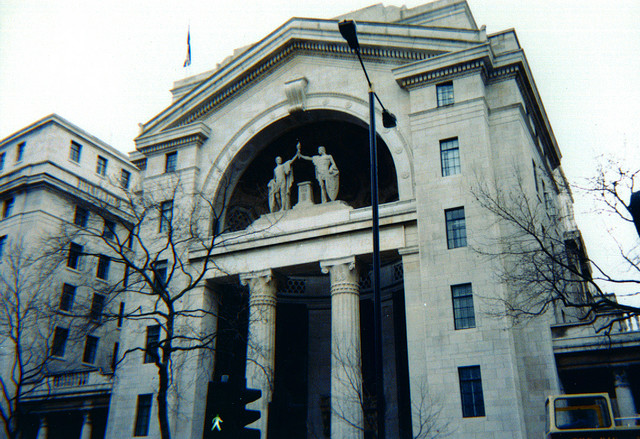
The BBC today announced that its Director of Vision, George Entwistle, has been appointed as its new Director-General. The man he will replace in the role, Mark Thompson, has not had an easy eight-year tenure. All manner of controversies – from outrageous comedians to erroneously-named cats – have provoked gleeful tabloid furore, some of which may have contributed in 2010 to the freezing of the licence fee for six years at the government’s behest.
Continue reading “Creative Licence – the case for a bold BBC under George Entwistle”
What she never thought she’d see
Published on the barackobama.com blog
Successful presidential campaigns are built from the ground up—perhaps more literally than you might think. While it may have seemed like a small contribution at first when Dr. Marie Metoyer brought folding chairs to our Manchester office, these chairs are helping us hold ever-larger phone banks here in the Queen City. And Marie’s contribution to the campaign doesn’t stop there. Continue reading “What she never thought she’d see”
 Josh Cowls